
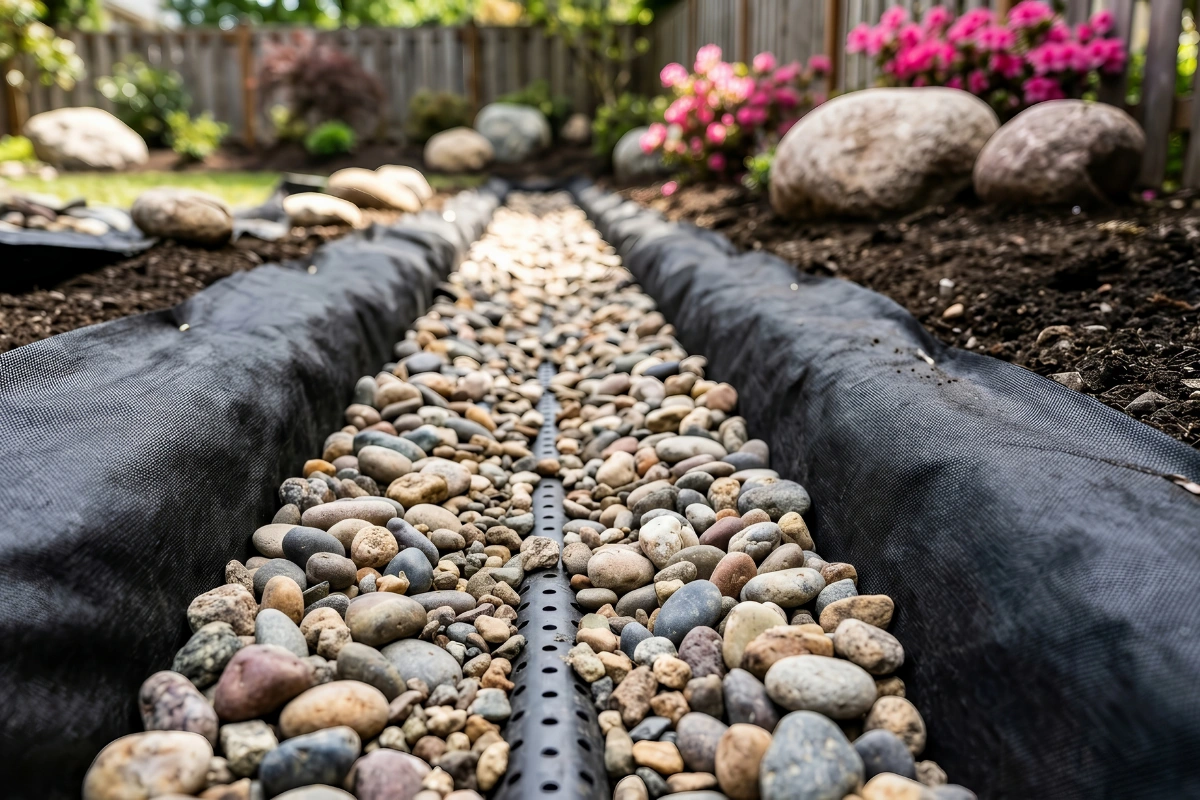
A French drain is designed for water that is moving through or saturating the soil, rather than simply sitting on a hard surface. On Los Angeles properties, it may be considered along persistently wet yard sections, beside retaining areas, or where subsurface moisture follows the natural grade and leaves the ground slow to dry.
The effectiveness of the system depends heavily on what is below the surface. Trench depth, elevation, soil conditions, perforated pipe, drainage stone, filter fabric, and the final outlet all influence how well water can enter the drain and move through it. Contractors within our network evaluate these conditions before determining whether a French drain fits the property.
How a French Drain Is Planned
A French drain works by creating a permeable underground path for excess moisture. Water enters through the stone-filled trench, reaches the perforated pipe, and follows the drainage route toward a suitable outlet. Careful layout is important because a trench in the wrong location or without adequate fall may do little to improve the underlying moisture problem.
- Trace wet soil and subsurface water movement to determine where the drain can intercept moisture effectively.
- Establish trench depth and fall before installing filter fabric, washed drainage stone, and perforated drain pipe.
- Plan a continuous drainage route so captured water has an appropriate location to move toward.


Dealing with persistently wet ground? Contact Us

“A French drain performs best when its location follows the water in the soil—not simply the most convenient path for a trench.”
When a French Drain Is Appropriate
French drains are most useful when the drainage concern involves moisture within the ground and there is a workable route for that water to leave the affected area. They are not automatically the right answer for every wet yard. Surface runoff, poor grading, roof discharge, and isolated low spots can require a different drainage approach, which is why the source of the water should be considered first.

Wet Soil Relief
Intercept excess moisture moving through soil in areas that remain saturated well after rainfall.

Below-Grade Routing
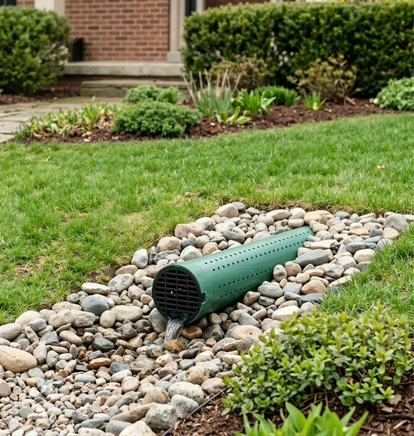
Move intercepted water through a concealed underground drainage path toward a suitable outlet.
French Drain Installation FAQs
Practical answers about French drain installation, wet soil, underground drainage, and residential properties in Los Angeles.
A French drain creates a permeable path beneath the ground for excess moisture. Water enters a gravel-filled trench, reaches a perforated pipe, and is carried along the planned drainage route toward an appropriate outlet.
A French drain may be appropriate when soil remains unusually wet after rain or moisture repeatedly moves through a particular section of the property. If the problem is mainly surface water collecting at one low point, another drainage method may be more suitable.
There is no single depth that is correct for every property. The trench should be planned around the source and depth of the moisture, existing grade, required pipe fall, surrounding improvements, and the elevation of the intended outlet.
French drains can be used in some areas alongside a home, but placement should be based on the actual source of moisture and site conditions. Foundation depth, utilities, grade, access, and where the drain will discharge all need to be considered before excavation.
The drainage route needs a suitable way to manage the water it intercepts. The appropriate outlet depends on the property's elevations, layout, existing drainage infrastructure, soil conditions, and applicable local requirements. This should be established before the trench is installed.