
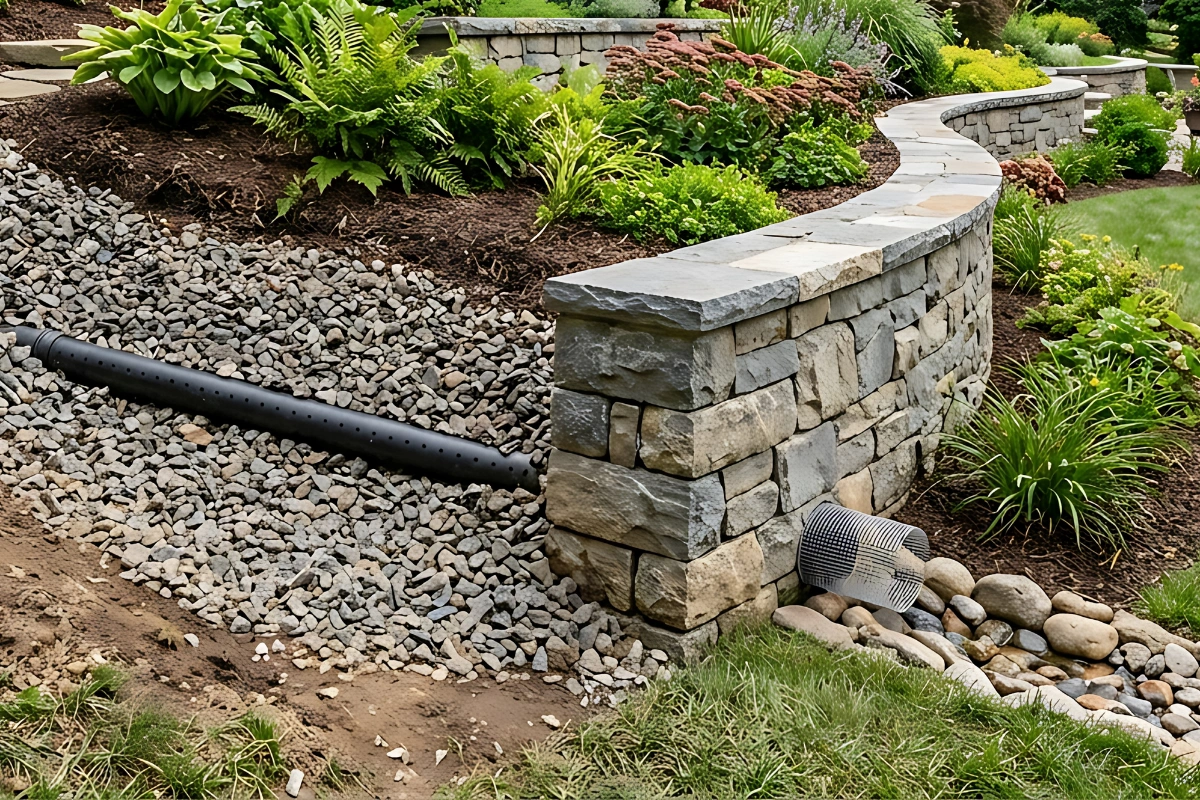
A yard that stays wet after rain usually has more going on than one isolated puddle. Water may be crossing the lawn from higher ground, draining from a roof or patio, settling along a fence line, or becoming trapped where the landscape does not provide a clear path for runoff. Contractors within our network evaluate these conditions across the yard before recommending a drainage approach.
Yard drainage solutions for Los Angeles properties can involve surface grading, French drains, area drains, catch basins, channel drains, or a combination of methods. The appropriate layout depends on the source of the water, changes in elevation, soil conditions, existing hardscape, landscaping, and where runoff can reasonably be directed.
Understanding Your Yard's Drainage
Before deciding where drains should go, it is important to understand why the yard is holding water in the first place. Contractors represented through our network look beyond the wet area itself and consider the surrounding conditions that influence how water enters, crosses, and leaves the property.
- Review yard elevations, low areas, slopes, and visible runoff paths that contribute to recurring wet conditions.
- Consider roof discharge, patios, walkways, neighboring grades, and landscaped areas that may add or redirect water.
- Develop a drainage layout around the property's actual conditions rather than relying on a single drainage method.


Dealing with a wet or poorly draining yard? Contact Us

“Good yard drainage begins with finding the source of the water, not simply treating the place where it finally collects.”
A Solution Built Around the Property
Two yards can show similar standing-water problems for completely different reasons. One may receive runoff from an uphill section of the lot, while another may have a shallow depression, compacted soil, or hardscape directing water into the landscape. That is why residential yard drainage is best approached as a site-specific system rather than a standard installation.

Runoff Assessment
Identify where water enters the yard and how the existing grade influences its movement.

Integrated Drainage
Combine suitable drainage methods when one component alone cannot address the yard's conditions.
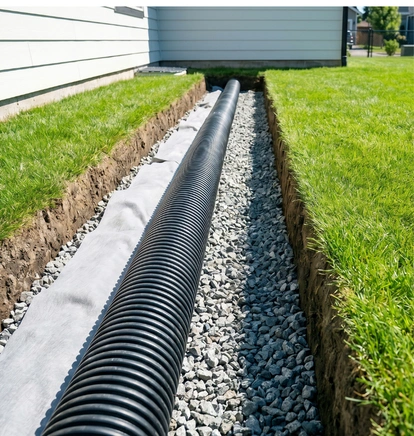
Yard Drainage FAQs
Common questions about standing water, muddy yards, runoff, drainage options, and residential yard drainage in Los Angeles.
Standing water can develop when the yard contains low areas, has limited surface slope, receives runoff from higher ground, or takes on water from roofs and hardscape. Soil conditions can also affect how quickly water moves into the ground, so the cause should be evaluated before selecting a drainage method.
There is no single system that is best for every yard. Depending on the property, the solution may involve grading, a French drain, catch basins, surface drains, channel drains, or multiple components working together. The source and direction of the water should determine the approach.
No. French drains are useful for certain subsurface and groundwater conditions, but they are not automatically the right answer for surface runoff. A defined low point may call for a surface inlet, while incorrect grading or hardscape runoff may require a different approach.
In many cases, yes. Existing lawns, planting areas, walkways, irrigation, trees, and other site features are considered when planning the drainage route. The amount of disturbance depends on the type of system, installation path, and conditions of the individual property.
Planning begins by reviewing the areas that stay wet and tracing where the water is coming from. Yard elevations, slopes, soil, roof runoff, hardscape, existing drains, and possible discharge routes are then considered to determine which drainage components are appropriate for the property.