
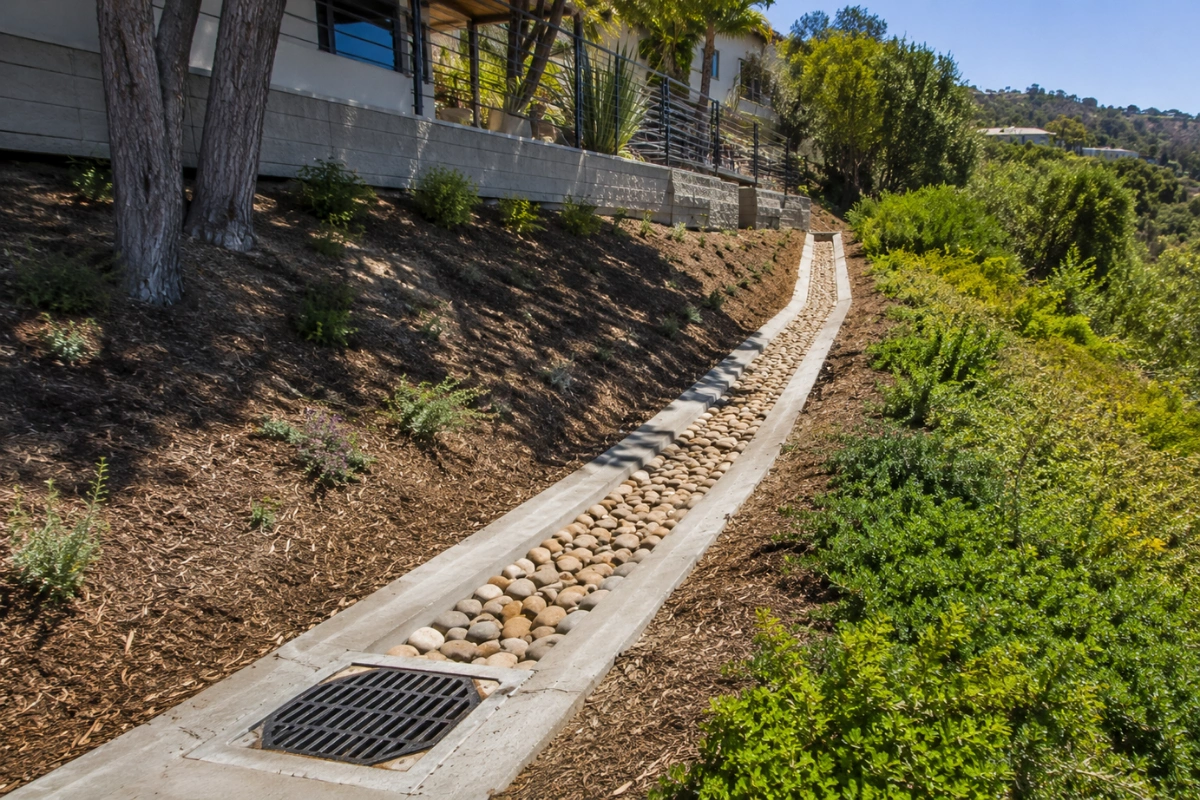
Drainage on a hillside property requires careful control of how water enters, crosses, and leaves the slope. During heavy rain, runoff can gain speed as it travels downhill, follow unexpected paths around landscaping and structures, or become concentrated at grade changes. Contractors within our network evaluate these conditions to develop hillside drainage solutions suited to the property's terrain.
Los Angeles hillside lots can include steep yards, retaining walls, terraced landscaping, narrow side slopes, and significant elevation changes. Rather than relying on a single drain, an effective approach considers the entire runoff path—from higher areas where water first reaches the property to a suitable location where it can be managed or discharged.
Drainage Designed Around the Slope
Hillside drainage planning begins with the terrain itself. Contractors represented through our network review slope direction, concentrated runoff paths, existing drainage, retaining-wall areas, and changes in elevation before determining which drainage measures are appropriate for the site.
- Trace how stormwater moves from upper elevations through slopes, terraces, landscaped areas, and lower portions of the property.
- Identify locations where runoff becomes concentrated, crosses improvements, or contributes to recurring erosion and washout.
- Plan collection, interception, and conveyance measures around the site's elevation changes and available drainage route.


Dealing with runoff on a sloped property? Contact Us

“On a hillside, drainage is not only about collecting water. The route it takes across changing elevations matters just as much.”
What Hillside Drainage Must Address
Water behaves differently on sloped ground than it does on a level yard. The drainage layout may need to intercept runoff before it reaches sensitive areas, manage water moving between elevations, and avoid creating a new concentration of flow farther downhill. These site conditions determine whether surface drains, swales, subsurface drainage, channel drains, piping, or a combination of measures should be considered.

Runoff Interception
Manage downhill flow before it reaches areas where concentrated water can create drainage problems.

Flow Routing
Move collected runoff through a planned route that accounts for slope, elevation, and available outlets.
Hillside Drainage FAQs
Common questions about managing stormwater runoff, drainage paths, erosion concerns, and sloped properties in Los Angeles.
Hillside drainage must account for elevation and the speed and direction of downhill runoff. Water may travel across several levels of a property before reaching a low point, so the entire flow path usually needs to be evaluated rather than focusing only on where water eventually collects.
Recurring soil washout, channels cut into landscaping, water crossing stairs or walkways, runoff collecting behind or near retaining areas, and heavy downhill flow during storms can all indicate that water is not being managed effectively across the slope.
The appropriate system depends on the source of the water and the terrain. Depending on site conditions, a hillside drainage plan may incorporate surface drains, swales, French drains, channel drains, underground piping, or multiple drainage components working together.
Drainage can be part of the solution when erosion is being caused or worsened by concentrated runoff. The source and path of the water should first be identified because erosion can also involve soil, landscaping, slope conditions, and other site-specific factors.
The process starts with the property's existing terrain and drainage behavior. Contractors within our network can evaluate slope direction, runoff sources, grade transitions, existing drains, retaining areas, and potential discharge routes before recommending an appropriate drainage approach.